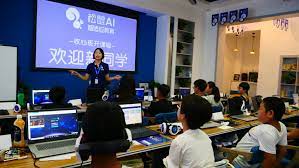
Eps 30: AI-Powered Classrooms: Redefining Education
In this 10-minute podcast titled "AI-Powered Classrooms: Redefining Education," the speakers discuss the impact of artificial intelligence (AI) on education. They highlight that AI can revolutionize the traditional classroom by personalizing the learning experience and enhancing teacher efficiency. The speakers emphasize that AI can cater to each student's individual needs, allowing for personalized learning paths. By analyzing student data, AI systems can identify areas where individual students may require additional support or challenges, enabling customized educational experiences. This personalized approach empowers students to learn at their own pace, maximizing their potential for academic growth. Additionally, AI can assist teachers by automating administrative tasks and grading, freeing up more time for classroom engagement. This enables educators to focus on crucial aspects of teaching, such as building relationships with students and providing targeted instruction. The speakers also address concerns about AI replacing teachers, emphasizing the importance of human guidance and mentorship in the learning process. Furthermore, AI-powered classrooms can provide valuable insights to education stakeholders. By analyzing aggregate data, AI systems can identify trends and patterns, helping policymakers and educators make informed decisions about curriculum development and resource allocation. The speakers conclude that AI has the potential to transform education by tailoring instruction to meet the unique needs of each student, augmenting teacher efficiency, and providing valuable data-driven insights for educational improvement. They stress the importance of approaching AI implementation in education with care, ensuring ethical considerations and human involvement remain at the forefront of decision-making.
| Seed data: | Link 1 |
|---|---|
| Host image: | StyleGAN neural net |
| Content creation: | GPT-3.5, |
Host

Sheila Griffin
Podcast Content
Introduction:
The advent of Artificial Intelligence (AI) has revolutionized various sectors, and education is no exception. AI-powered classrooms are transforming the traditional methods of teaching and learning, bringing forth a new era in education. This podcast aims to delve into the potential of AI in education, exploring its benefits, challenges, and the impact it has on students.
Body:
1. The Benefits of AI in Education:
AI technology offers numerous benefits in the classroom. One of the significant advantages is the ability to personalize learning experiences for each student. AI algorithms can analyze student data and tailor teaching methods to cater to individual needs, ensuring efficient and effective learning. This personalized approach encourages students to engage actively and boosts their academic performance.
2. Enhancing Student Engagement:
AI-powered classrooms foster student engagement through interactive platforms and virtual reality simulations. These technologies create immersive learning environments, making education more enjoyable and compelling. Students can explore complex concepts through simulations, experiments, and gamified learning modules, enhancing their understanding and motivation.
3. Intelligent Tutoring Systems:
AI-powered intelligent tutoring systems serve as virtual tutors, guiding students through personalized lessons. These systems adapt to individual student needs, offering real-time feedback and assistance, providing valuable support to both struggling students and those looking for advanced challenges. This personalized attention accelerates the learning process and allows educators to focus on individual student growth.
4. Automated Assessment and Feedback:
AI technology also simplifies the process of assessment and feedback. Automated grading systems powered by AI algorithms can quickly evaluate multiple-choice questions and provide instant feedback. This frees up teachers' time, allowing them to focus on more complex assignments and providing detailed feedback on subjective assessments.
5. Addressing the Digital Divide:
AI-powered classrooms have the potential to bridge the digital divide that exists in many education systems. With AI technology, students from remote areas, who lack access to quality education, can engage in online learning. This ensures equitable access to education, offering opportunities for students who may have been disadvantaged in traditional classrooms.
6. Ethical Concerns and Challenges:
While AI brings significant benefits to education, it also raises ethical concerns and challenges. Privacy is a major concern, as the use of AI involves the collection and analysis of vast amounts of student data. It is crucial for educational institutions to address these concerns and ensure the protection of student information.
7. Teacher-Student Relationship:
AI technology cannot replace human teachers, and it is essential to strike a balance between AI and human interaction in the classroom. Teachers play a critical role in guiding and mentoring students, providing emotional support, and encouraging critical thinking skills that AI cannot replicate fully. AI should be used as a tool to assist teachers, rather than as a replacement for them.
Conclusion:
AI-powered classrooms are redefining education, offering personalized learning experiences, enhancing student engagement, and bridging the digital divide. While there are challenges and ethical concerns to overcome, AI's potential to revolutionize education cannot be overlooked. By effectively integrating AI technology with traditional teaching methods and ensuring the ethical use of student data, we can harness the power of AI to create a more efficient, inclusive, and effective educational experience for all.